
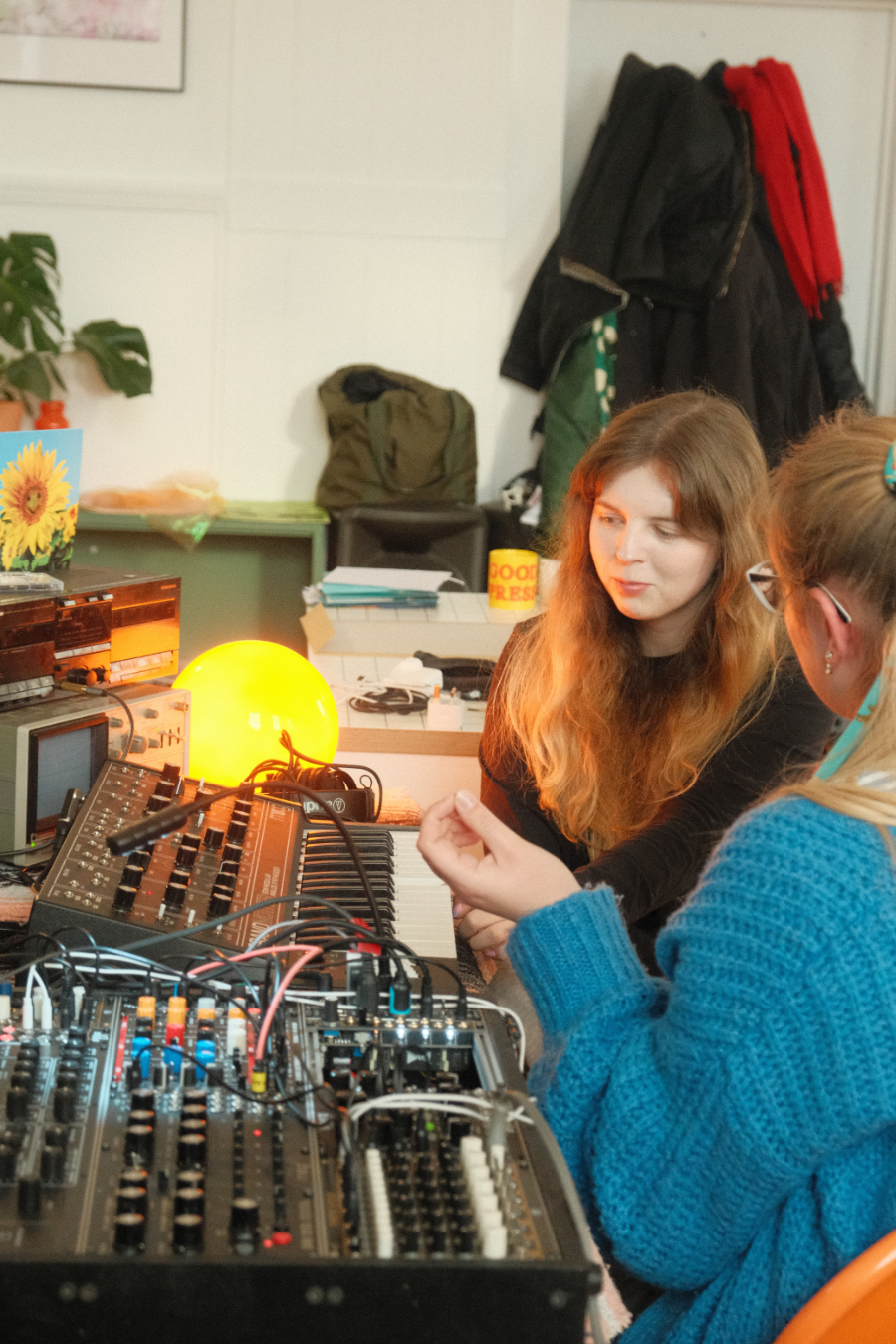
THE LIBRARY
GLOSS is located at 5 Florence Street, a former school building in Glasgow's Gorbals, just south of the River Clyde and a short walk from the city centre.
Glasgow Library of Synthesized Sound
5 Florence Street
Glasgow, G5 0YX
-
At the front door of Florence Street there is a buzzer system - ring GLOSS and someone will buzz you in. Enter the building through the main entrance on Florence Street. Once inside, head towards the centre of the building, where you'll find the lift. GLOSS is on the second floor. You can also take the stairs.
If it's your first time visiting and you're having trouble finding us, get in touch.
-
Train: Argyle Street station is around 12 minutes' walk away. Glasgow Central is approximately 15 minutes on foot.
Subway: Bridge Street is the nearest subway station, around 13–14 minutes' walk away.
Bus: There are bus stops on Ballater Street and Crown Street, both a couple of minutes' walk from the building.
-
Cycle parking is available in the building's front car park, to the left of the entrance.
There’s a free car park for visitors within the gates of Florence Street.
-
There is step-free access to the building via a ramp at the main entrance, and a lift providing access to GLOSS on the second floor.
Accessible toilets are located on the groundfloor and can be reached by lift.
The entrance ramp is quite steep, so if you have any concerns about accessing the building, please get in touch and we'll discuss arrangements.
We're also happy to discuss any other access requirements before your visit.
-
The library is open for booked sessions, workshops and events rather than general drop-in visits. Check our programme to see what's coming up and book a place.
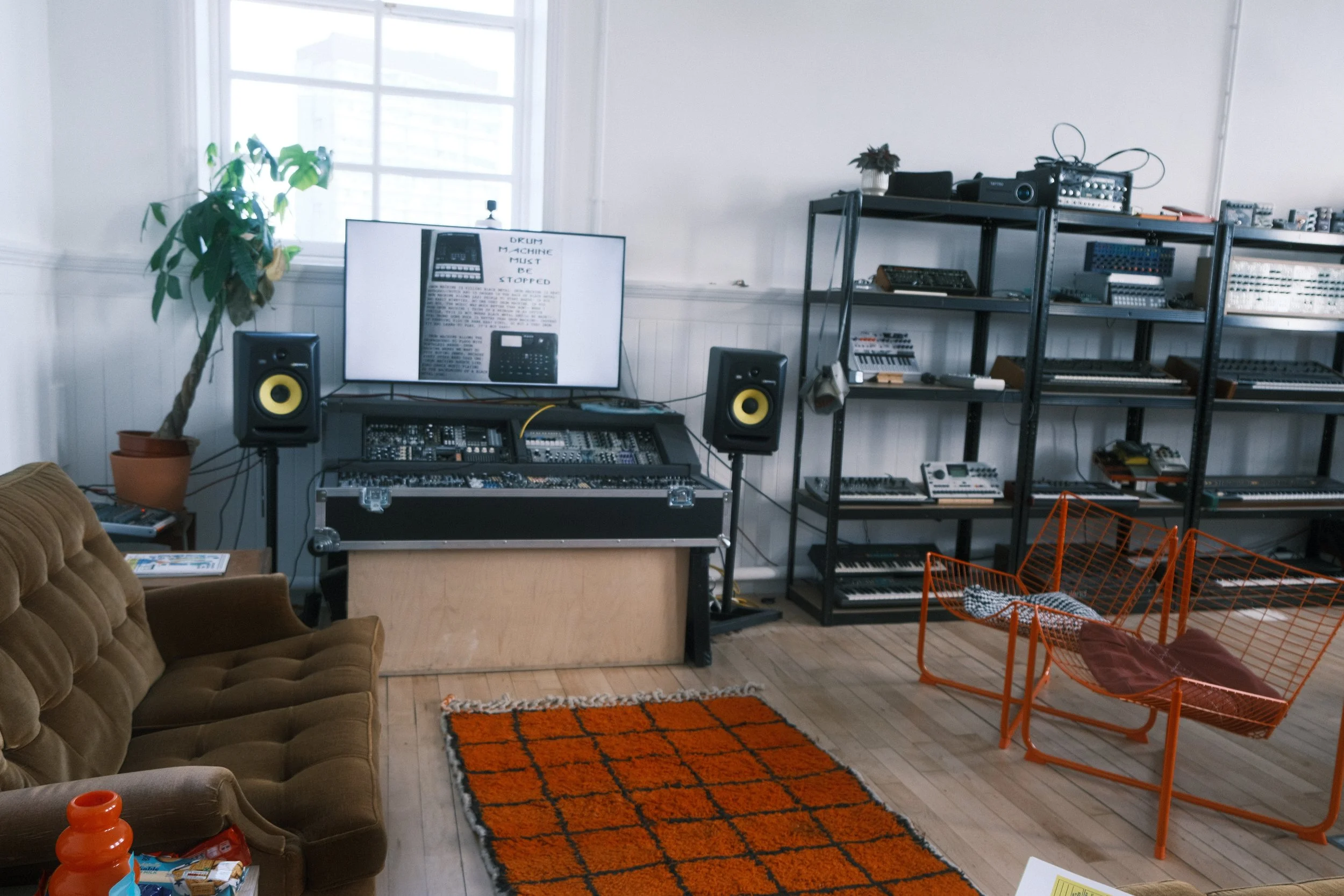
We’re located on the second floor of an old Victorian school house. There’s a ramp at the building entrance and a lift in the centre of the building. When you get to our door, we ask that you take your shoes off and leave them at the door. It's partly practical, but we also like the idea of making a wee distinction between the world outside and the one inside.
When you come in you'll see a wall of instruments blinking away amongst the plants - There's often incense burning (feel free to let us know if you’d prefer there isn’t), sunlight coming through the windows (when we get it) and some gentle background bleeps and boops. Instruments are stacked along the walls, while workstations in the middle of the room provide space for people to sit down and get stuck into something. There’s headphones for working on your own (but please feel free to bring your own), speakers for listening together, and a comfortable seating area where you can take a break, have a cup of tea or have a wee chat.
We've tried to make a place where people feel comfortable spending time, whether they're working intently on something or just playing about. A lot of the time, folk arrive with one idea of what they want to do and end up spending their time on something entirely different.
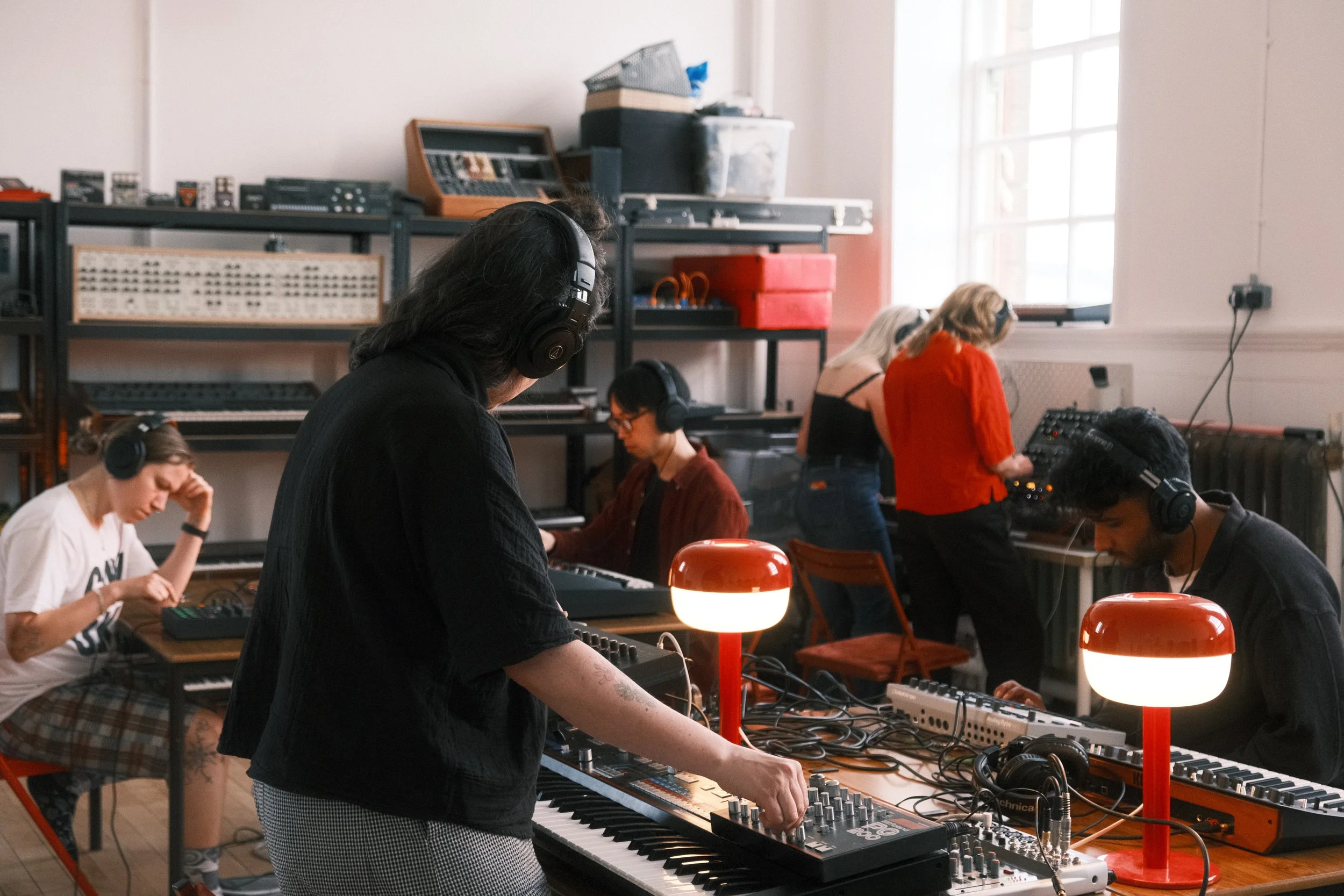
At the heart of GLOSS is a collection of electronic instruments that have been donated or loaned to us by people and organisations who share our belief that instruments are meant to be played.
Certain instruments seem to have an immediate appeal, while others take a bit of patience or a few return visits before they start to make sense. We're interested in both, and in helping people find things that suit their own particular interests rather than prescribing what they ought to be using.
THE COLLECTION
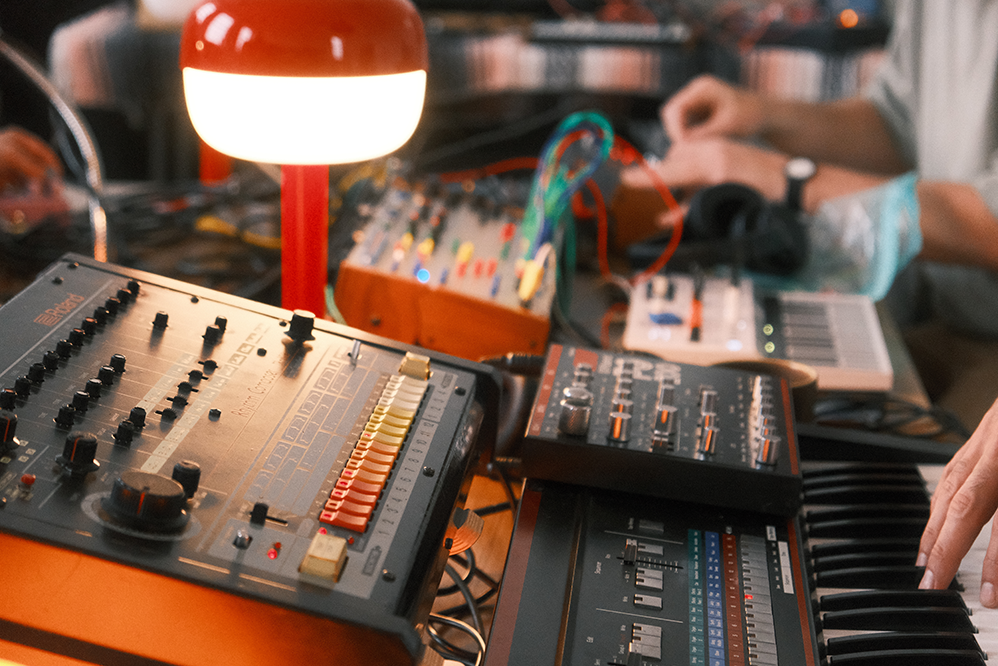
The collection spans several generations of electronic music-making, from early drum machines like Roland's TR-77 (ours has been modified to accept MIDI) to newer and more experimental designs such as the Cyma Forma ALT and Korg Berlin's Phase8. One particular favourite is a small microtonal modular synthesiser we've assembled around a 4ms Ensemble Oscillator; some folk will make beautiful harmonic drones with it and others end up with mad harsh rhythmic textures.
There's also Instrument for the People of Glasgow, a modular synthesiser and sculptural artwork created by artist Scott Myles, using modules donated by instrument makers from around the world. It's a significant part of the collection, although we don't treat it as something separate or untouchable. Its modules are regularly moved around, finding their way into other setups, while different instruments and ideas make their way back into it.
Generally, when you arrive, we encourage visitors to tell us what they're interested in and we'll help you find something to get started with.
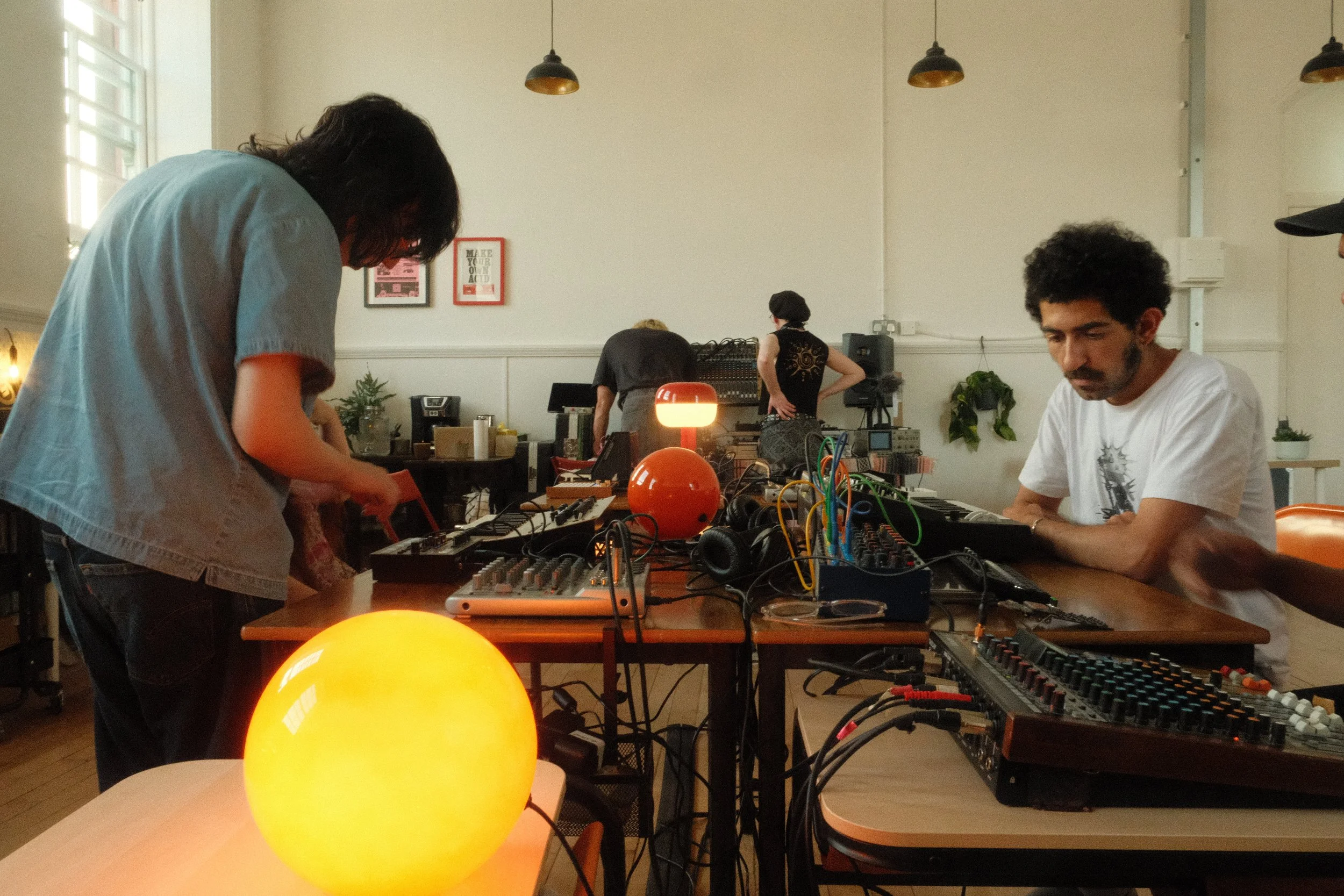
There are lots of different ways to get involved with GLOSS. Some people come to work on recordings or prepare for performances, others are interested in learning something new or trying out an instrument they've been curious about. Some come with friends to make music together, while others enjoy the opportunity to meet people, listen to music or spend a few hours in the company of folk with similar interests.
Our Open Sessions offer regular access to the library and its instruments, with a librarian on hand to help people get set up and find their feet. They're fairly informal and self-directed, with people free to work on their own projects, try new instruments or collaborate with others.
We also run regular club sessions, including Synth Club, Ableton Club and Dungeon Synth Club, bringing people together around particular interests to share knowledge, ideas and music. For those who prefer something a little more structured, we offer introductory workshops and masterclasses covering different instruments, techniques and approaches to making electronic music.
Alongside all this, GLOSS hosts performances, exhibitions, installations, artist residencies and other events, with local and international artists contributing to the programme. We're also developing more opportunities for collaborative music-making, group experimentation and sharing work.
You don't need any previous experience to take part in GLOSS. We try to provide different ways in, whether you're completely new to electronic music or have been making it for years.